Self-directed Learning: Possibilities and Limitations in a Developing Country
Most people know about formal education: education that is structured and undergone in a specific institution. It means waking up almost every morning to take classes from teachers who have a set curriculum; then, getting assignments, classwork, and projects with end-of-session tests and examinations, all culminating in a structured assessment. However, before the emergence of education in a school setting, learning was self-managed, self-motivated and self-assessed.
Greek philosophers like Aristotle, Socrates and Plato, and other individuals like Alexander the Great and Caesar were all self-directed learners. They looked out for things of interest by themselves and studied these things. They needed no building to learn; in this generation, do these kinds of people still exist?

Technology has made self-directed learning somewhat easier. Someone wants to make dinner to impress a date; he goes to the internet, searches for the best recipe and follows the instruction strictly, yielding a very sumptuous meal and an impressed date. This successful guy has been able to enter his date’s heart (food, cooked by a man, is the way into a woman’s heart) without needing to attend culinary school. With the internet, one has access to a vast sea of knowledge without necessarily having to attend a school – this is not a ‘school is a scam’ statement.
Nowadays, with the high demand for certain skills, almost everyone is learning an online course on Coursera or some other online course platform or watching a YouTube video on how to do this or how to do that. Take for instance the covid period where almost everyone you asked was learning something new over the internet. These are individuals taking responsibility to learn by themselves with little or no assistance, with the liberty of assessing progress before and after the learning process.

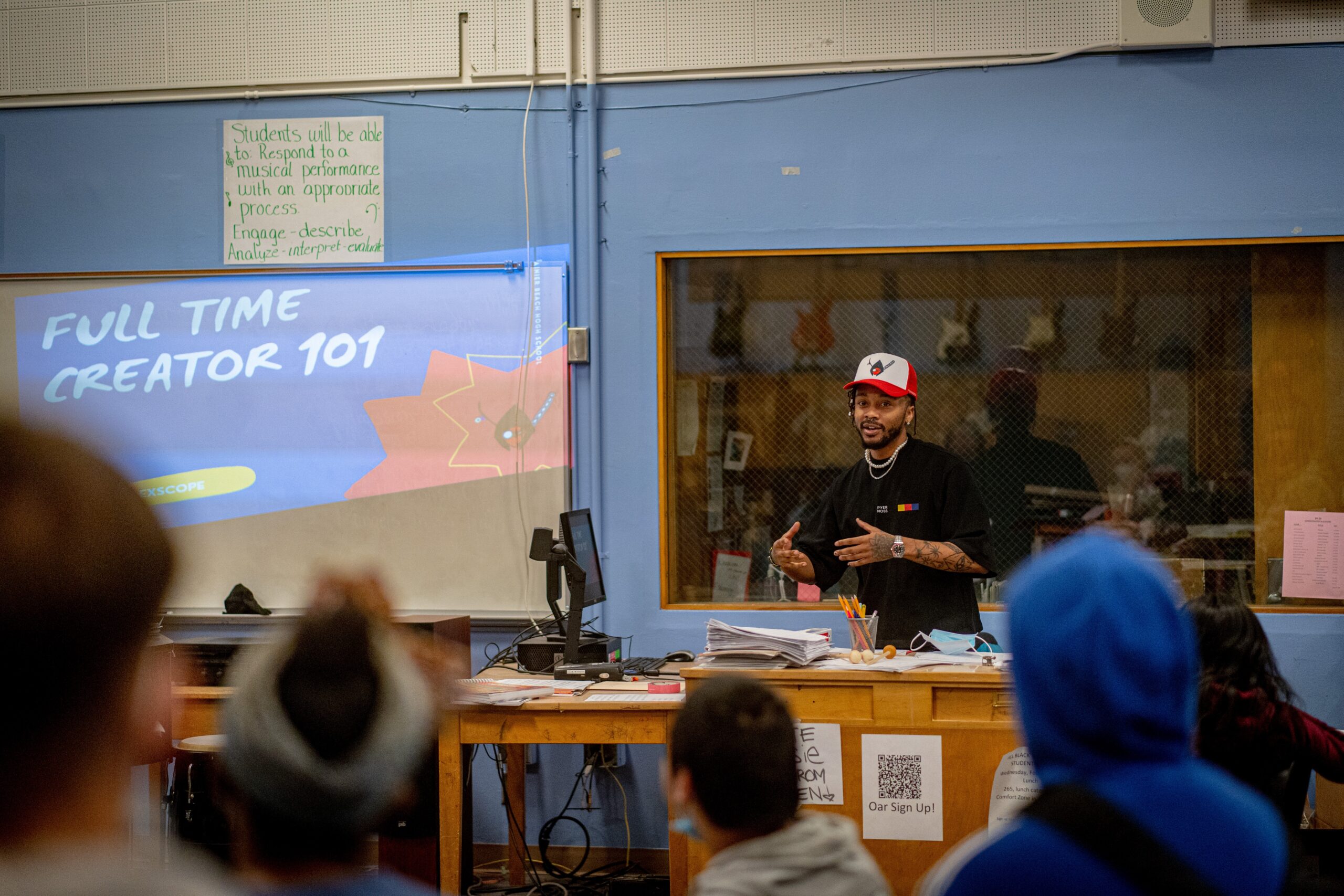
Schooling can also apply self-directed learning, where the teacher does not serve the main meal to the students. The teacher gives an appetizer to stimulate the students to go on further research – a lazy teacher may also use this as an excuse. For example, the teacher takes on a mathematical equation and uses the longest method in solving such an equation. Then he tells the students that there is an easier way to solve the equation. This should encourage the students to find out this easier way.
Students are given a go-ahead to study a broad topic like any significant day in history. They are given full authority on how to go about the topic, with guidance from the teacher. These students check for their areas of interest and evaluate what was discovered. They may discuss these discoveries and evaluations with the teacher, but the assignment was aimed at letting the students gain knowledge. In this case, the teacher did not serve any part of the meal but allowed the students to make their meal to their liking with little guidance. Enough with the making of meals, right?

Self-directed learning has many other benefits over structured learning: in the former, the money spent is significantly lesser and the capacity for a larger number of people is greater. In developing countries, this comes in handy to ensure the majority of the population gets a significant level of education without having to pass through school doors. This checks the alarming population growth in various developing countries with a concomitant supply of education.
It is no news that African countries are backward in technological advancements – the 5G network is yet to reach most African countries, despite its release over 3 years ago. However, with individuals engaging in self-directed learning, technology can be fast-forwarded in Africa. Skills like programming, AI development and data science can be used locally to improve the tech industry of these countries. It can transcend to even other sectors, such as the banking sector, agricultural sector and manufacturing sector.
The human resource department of every sector would also improve. People say that school is not enough to garner all the necessary skills for the workforce. Soft skills like teamwork, curiosity, effective communication and critical thinking can be acquired by self-directed learning. Even advanced knowledge not tackled in formal education can be tapped. This culminates in a quantity- and quality-based workforce. This moves every nation forward.
However, self-directed learning requires a variety of tools and skill sets to maximize its use. With the archiving of excellent information with each discovery, it might be difficult for beginners to sieve out the vital information they are searching for. Some communities and platforms can be utilized for this purpose. The R community can be used to obtain information related to R programming.
The network connectivity in various developing countries is nothing to talk about. Only three African countries fall within the top 100 according to Cable’s ranking on internet connectivity. This discourages individuals from taking online courses as it would be time-consuming and stressful. One can end up spending half the total used to study on downloading the course content. This is even worse when one takes the class in real-time: network glitches and reduced efficiency in gaining what is taught.
Apart from poor internet connectivity, poor knowledge of ICT also deters the use of ICT. A study done in a Kenyan university showed that individuals are opposed to distance learning due to inadequate knowledge of the use of electronic devices. This deterrence is also directed to unavailable funds to get devices for the self-same use. Why would one want to engage in self-directed learning when he does not know how to use ICT devices or does not even have one?
Learning institutions that use poorly drafted online learning platforms, or those that have teachers who have poor technical skills also offer a major limitation to the use of self-directed learning in the formal education setting. Individuals would rather attend physical classes than attend online classes with horrible user experiences. Fixing this would require a better and user-friendly learning platform, and training sessions for teachers who are technically blind.
Despite convenience and ease of access, self-directed learners need more than just the internet for learning, but also tools and platforms to access this knowledge. The changes in the world do not recognize the deficiencies one has in one’s learning journey. Therefore, take control of the reins and start self-directed learning.
Written by Henry Agwu
for God is Love Educational Foundation

You may also like